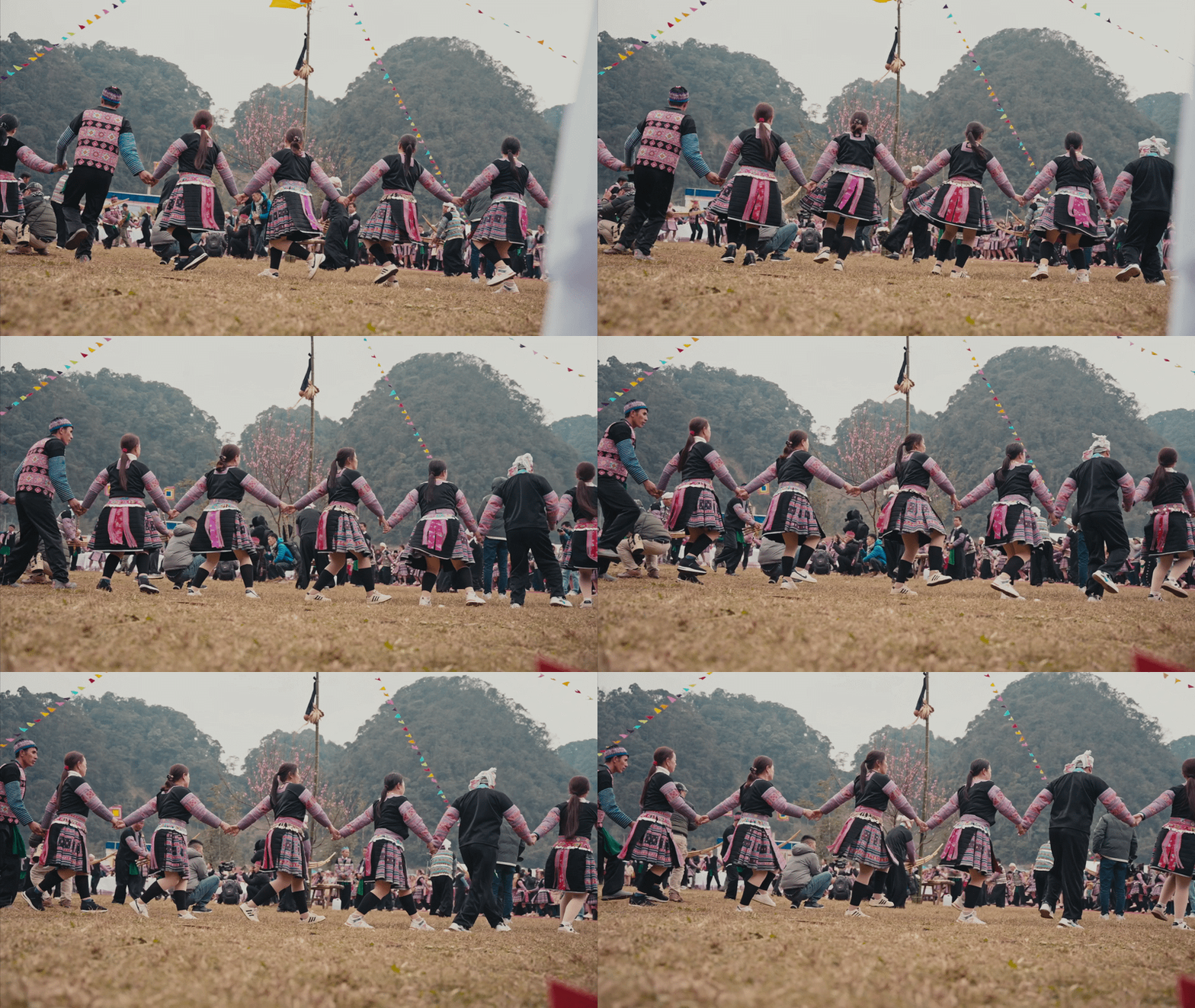
THE STORY BEHIND “CROWNED”
Women across cultures and generations are carrying something unseen: tradition, expectation, heritage, hope. When we pay attention, we can find subtle symbols that signal the weight. This is how the collection began.
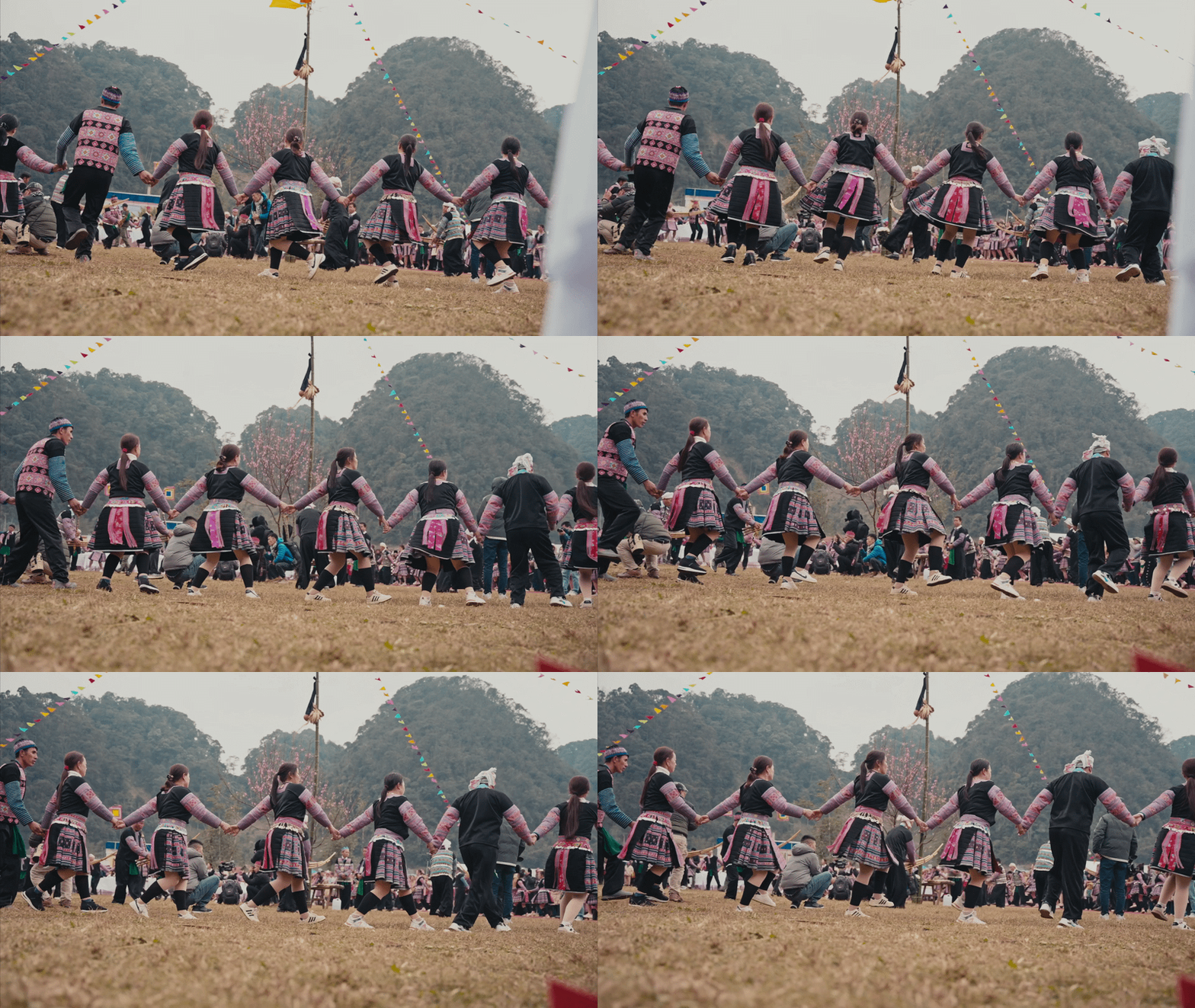
The first photograph of CROWNED was made in Vietnam in January 2025. At the time it was not a series. It was a single portrait of a woman wearing a traditional headdress that is exclusively worn by elder women, symbolising honour and the preservation of ancestral knowledge.
The idea came later, and slowly. I began to notice how many women, in different countries and generations, carried something on their heads. It was never only a dress, a tool or a container. A ceremonial headdress. An offering bound for the temple. The cloth of an ancestral people. A basin of the day’s harvest. Each one had a weight beyond its own.
The series moves through a whole life. A child walks the tide flats with the morning’s gathering. A young dancer wears the gilded form of a ritual much older than she is. A woman carries her offering through a procession, steady under its load. Elders keep the culture in their faces and hands, crowned as they have been many times before.
I wanted to pay attention to posture and patience, and to how a burden, carried long enough, turns into bearing. Each portrait exists because someone allowed me to stand close enough to see it.
Some crowns are given. Some are earned. All are heavy. These women are not wearing their crowns. They are upholding them.
Each photograph is printed on museum-grade Hahnemühle paper, signed and numbered, in editions of 60 across all sizes. It arrives with a letter telling the story behind the image, and a certificate of authenticity. Once an edition is gone, it will not be printed again.
THE PAPER THE ART IS PRINTED ON
In a small workshop in Bali, a group of women make every sheet by hand. This is the story of Saraswati, and why the photographs for The Art Letter are printed there.
I first visited Saraswati in August 2026, and what I remember before anything else is the smell. Paper made by hand has one, and the whole workshop was covered in it. I had come to see where the print club would be printed. I had not expected to be so moved by something this small.
The room was busy in a way you rarely see: a concentrated, unhurried busyness. The women were bent over their work, each focusing on a small detail of a sheet. Some were adding flowers. Others were crafting boxes to sell. Nothing was rushed and nothing was idle. It was the attention of people who have done this many times and still care how it turns out.
Saraswati began in 1995, founded by Kali Sari with the support of the Wisnu Foundation. For three decades, women from the village have turned recycled paper, plant fiber and natural dye into handmade sheets. It is a craft that belongs to them.
Holding the first edition of The Art Letter printed there is something I keep thinking of. The edges are rough, not cut. The texture is soft and imperfect. It smells of the workshop. And the colours carry small imperfections, beautiful ones. It’s so interesting to look at; each edition turns out as unique as the paper it was printed on. The eye keeps moving, and the print rewards a second look, and a third.
A machine-made print is flat, even and finished. This is not. The imperfections are not mistakes. They are evidence of hands. My work is about people who carry things by hand: tradition, labour, heritage. It felt right that the photographs should be received by hands too.
I wanted other people to be able to hold and feel this. That is part of what The Art Letter is for. If you would like to receive the first edition, the waitlist is open.